



rodillos de respaldo
The automotive industry demands steel sheets with exceptional surface quality, precise mechanical properties, and consistent flatness to meet stringent manufacturing requirements. One of the most critical processes in achieving these characteristics is skin pass rolling , a light cold rolling operation applied after annealing. A 4 hi skin pass mill is typically used to impart the desired surface texture, improve flatness, and eliminate yield point elongation, which prevents stretcher strain marks during stamping. The Fundamentals of Skin Pass Rolling in Automotive Steel Processing 1. Purpose and Mechanism of Skin Pass Rolling Skin pass rolling , also known as temper rolling, is a precision cold rolling process applied to annealed steel strips to enhance their mechanical and surface properties. Unlike heavy cold reduction, which significantly alters thickness, skin pass rolling involves a minimal reduction (typically 0.5% to 3%) to achieve the following: Elimination of Yield Point Elongation: Prevents Lüders bands (stretcher strains) that can form during deep drawing or stamping. Improved Surface Texture: Imparts a controlled roughness for better paint adhesion and lubrication in forming processes. Enhanced Flatness: Corrects minor shape defects remaining after annealing. Work Hardening Adjustment: Fine-tunes mechanical properties for optimal formability. 2. Differences Between Cold and Hot Skin Pass Mills While most skin pass rolling is performed at room temperature, a hot skin pass mill is sometimes used for specific automotive steel grades, particularly those requiring enhanced ductility or special surface finishes. The key differences include: Cold Skin Pass Mill : Operates at ambient temperature, providing precise control over surface finish and mechanical properties. Hot Skin Pass Mill : Processes steel at slightly elevated temperatures (below recrystallization), reducing flow stress and allowing for better shape correction in high-strength steels. A 4 hi skin pass mill configuration (with two work rolls and two backup rolls) is commonly used due to its ability to apply uniform pressure across the strip width, ensuring consistent surface treatment. Critical Applications of Skin Pass Rolling in Automotive Steel 1. Surface Quality Enhancement for Exposed Body Panels Automotive exterior panels, such as doors, hoods, and fenders, require an exceptionally smooth and uniform surface to ensure flawless paint application. Skin pass rolling refines the strip surface by: Reducing Surface Defects: Removes minor imperfections from prior processing. Controlling Roughness: Adjusts peak count (Rpc) and peak-to-valley height (Rz) to optimize paint adhesion and gloss. Preventing Orange Peel Effect: Ensures uniform deformation during stamping. 2. Improving Formability for Deep-Drawn Components Structural automotive parts, such as chassis components and fuel tanks, undergo severe forming operations. Skin pass rolling enhances their formability by: Suppressing Yield Point Elongation: Prevents strain localization that leads to surface defects. Adjusting Hardness: Provides a slight work-hardening effect to improve strength without sacrificing ductility. Enhancing Lubricant Retention: The controlled surface texture improves the effectiveness of forming lubricants. 3. Dimensional Stability for High-Strength Steel Grades Advanced high-strength steels (AHSS) and ultra-high-strength steels (UHSS) are increasingly used in lightweight automotive designs. However, their high yield strength makes them prone to shape defects. A 4 hi skin pass mill ensures: Residual Stress Relief: Minimizes coil set and edge waves. Uniform Mechanical Properties: Balances strength and elongation across the strip length. Springback Reduction: Improves dimensional accuracy in stamped parts. Integration of Automatic Packaging Systems in Skin Pass Lines After skin pass rolling , steel coils must be carefully handled to preserve surface quality before shipment to automotive manufacturers. Modern automatic packaging systems play a crucial role by: 1. Ensuring Scratch-Free Coil Handling Robotic Wrapping Systems: Apply protective films without manual intervention. Non-Contact Coil Transfer: Uses magnetic or vacuum lifters to avoid surface damage. 2. Quality Assurance and Traceability Laser Marking: Engraves coil identification for tracking through the supply chain. Automated Inspection Cameras: Detect surface defects before packaging. 3. Optimized Logistics for Just-in-Time Delivery Automated Weighing and Labeling: Ensures compliance with automotive industry standards. Palletizing Robots: Prepare coils for efficient transportation. Future Trends in Skin Pass Rolling for Automotive Steel 1. Smart Skin Pass Mills with AI-Based Process Control Adaptive Roll Force Adjustment: Uses real-time data to optimize rolling parameters. Predictive Surface Quality Monitoring: AI algorithms detect potential defects before they occur. 2. Eco-Friendly Skin Pass Technologies Dry Skin Pass Rolling: Reduces lubricant usage while maintaining surface quality. Energy-Efficient Mill Designs: Lower power consumption in 4 hi skin pass mills. 3. Advanced Coating-Skin Pass Hybrid Lines In-Line Surface Treatment: Combines skin pass with pre-treatment for galvanized and coated steels. Laser-Textured Rolls: Customize surface patterns for specific automotive applications. Skin pass rolling is an indispensable process in automotive steel production, ensuring superior surface quality, formability, and dimensional stability. The use of a 4 hi skin pass mill guarantees precise control over mechanical properties, while a hot skin pass mill offers unique advantages for high-strength steel grades. Furthermore, the integration of automatic packaging systems enhances efficiency and protects coil integrity throughout the supply chain. As automotive manufacturers demand higher-performance steels with stricter quality requirements, advancements in skin pass rolling technology—including AI-driven process optimization and sustainable mill designs—will continue to play a pivotal role in meeting these challenges. By refining this critical process, steel producers can deliver materials that meet the exacting standards of modern vehicle manufacturing.

We have successfully executed over 500
projects around the world,
many first-of-their-kind
research projects and products in China, including
We have successfully executed over 500
projects around the world,
many first-of-their-kind
research projects and products in China, including
-
2004
The 1st hydraulic AGC system for hot rolling of ribbon steel
-
2006
The 1st AFC system used for 1450mm skin pass mill
-
2009
The 1st 5-stand tandem line with 2-stand POR & Uncoiler for 650mm ribbon steel
-
2012
The 1st reversing mill for 1380mm strip
-
2016
The 1st soft-rolling system used in skin pass mill
-
2019
The 1st fully automated medium-width tandem cold rolling mill
-
2021
The 1st 5000KN Twin-stand double skin pass mill
-
2022
The 1st coupled pickling line & tandem cold mill with two modes - big roller & small roller
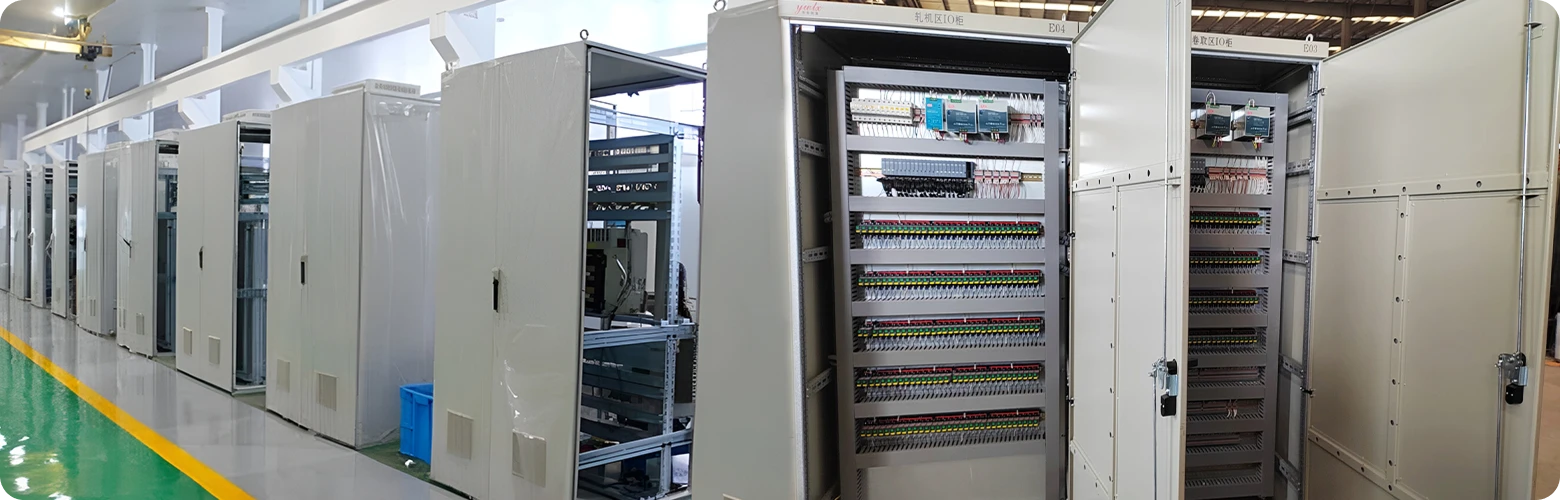
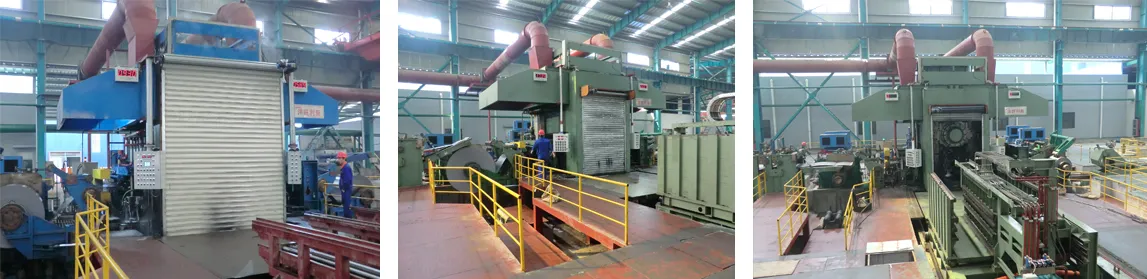
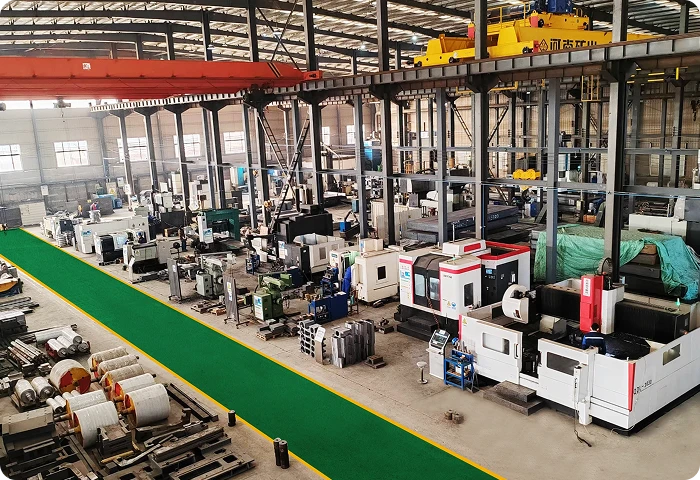
Yang Wang Li Xin operates a state-of-the-art facility over 66,000 square meters,and our manufacturing facility is fully equipped with high-tech machinery and high-capacity cranes. This enables us to handle large work pieces measuring 4.5m in width, 10m in length, and 1.5m in height, guaranteeing our capacity to produce 1800mm skin-pass mills and 1450mm rolling mills. The individual piece can weigh up to 100 tons.

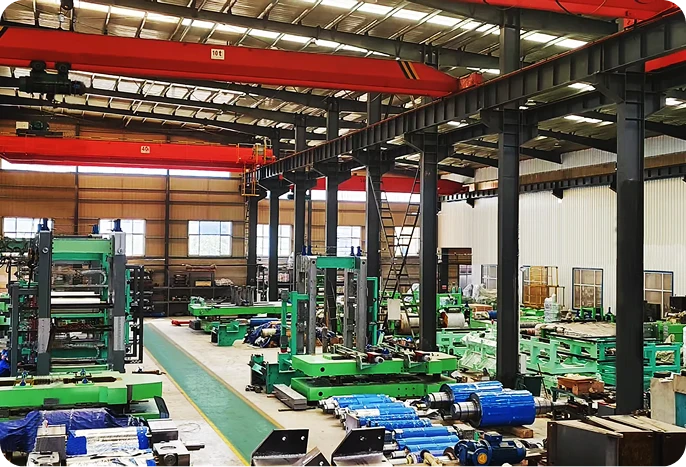

Quality is fundamental to the enterprise survival. We have established a comprehensive and meticulous quality management system and have successfully obtained ISO14000 certification. Starting from the design source, it supervises the entire production cycle, including design, procurement, processing, assembly, in-factory testing, installation, and online commissioning. The workshop is equipped with measuring tools like vernier calipers, spectrometers, hardness testers, and ultrasonic flaw detectors. They are used to check materials and control tolerances to ensure the final equipment meets or exceeds requirements. All products have a unique code, This enables the easy identification and traceability of the equipment components and ensures full control of quality.


-
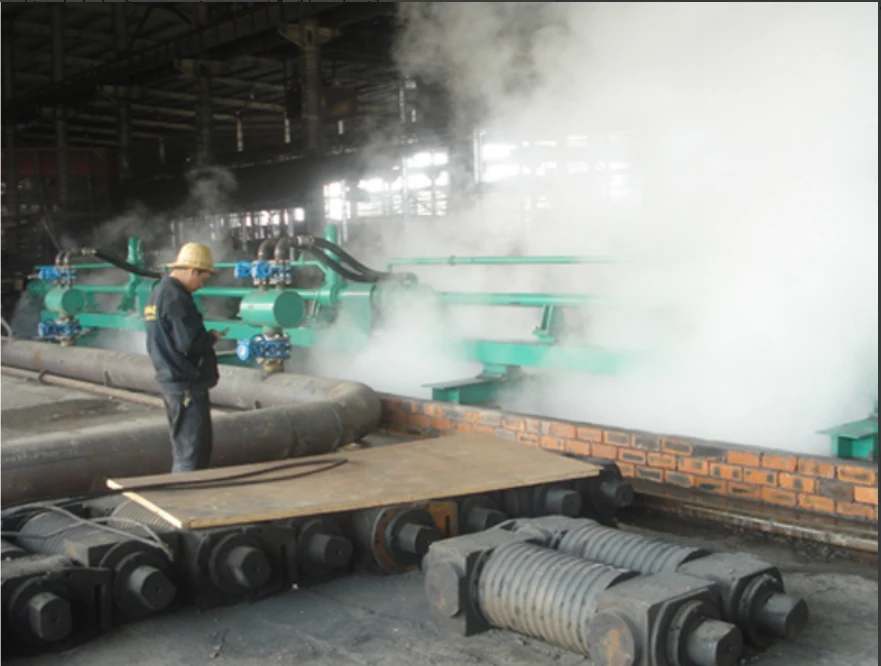 Cladding Rolling Mill - Beijing Yang Wang Li Xin Sci&Tech Co.,Ltd. | Energy-Efficient Metal Bonding TechnologyDiscover how Beijing Yang Wang Li Xin Sci&Tech Co.,Ltd. is redefining the future of metal cladding through its advanced cladding rolling mill technology. This cutting-edge solution combines precision engineering with eco-friendly practices to deliver superior results across multiple industries. Technical Features of the Cladding Rolling Mill The cladding rolling mill developed by Beijing Yang Wang
 -
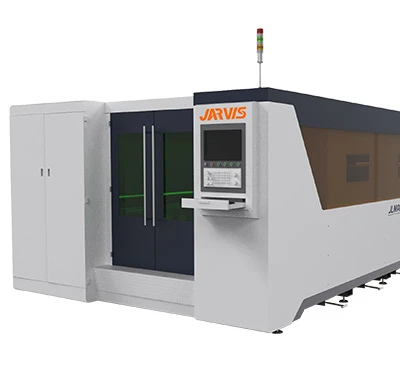 Agc System For Hot/Cold Strip Rolling MillTitanium rolling mills have revolutionized the way industries approach high-performance metal needs. Renowned for their exceptional strength-to-weight ratio, corrosion resistance, and bio-compatibility, titanium and its alloys are vital for sectors such as aerospace, automotive, medical implants, and even consumer electronics. The process of creating titanium products begins in the titanium rollin
 -
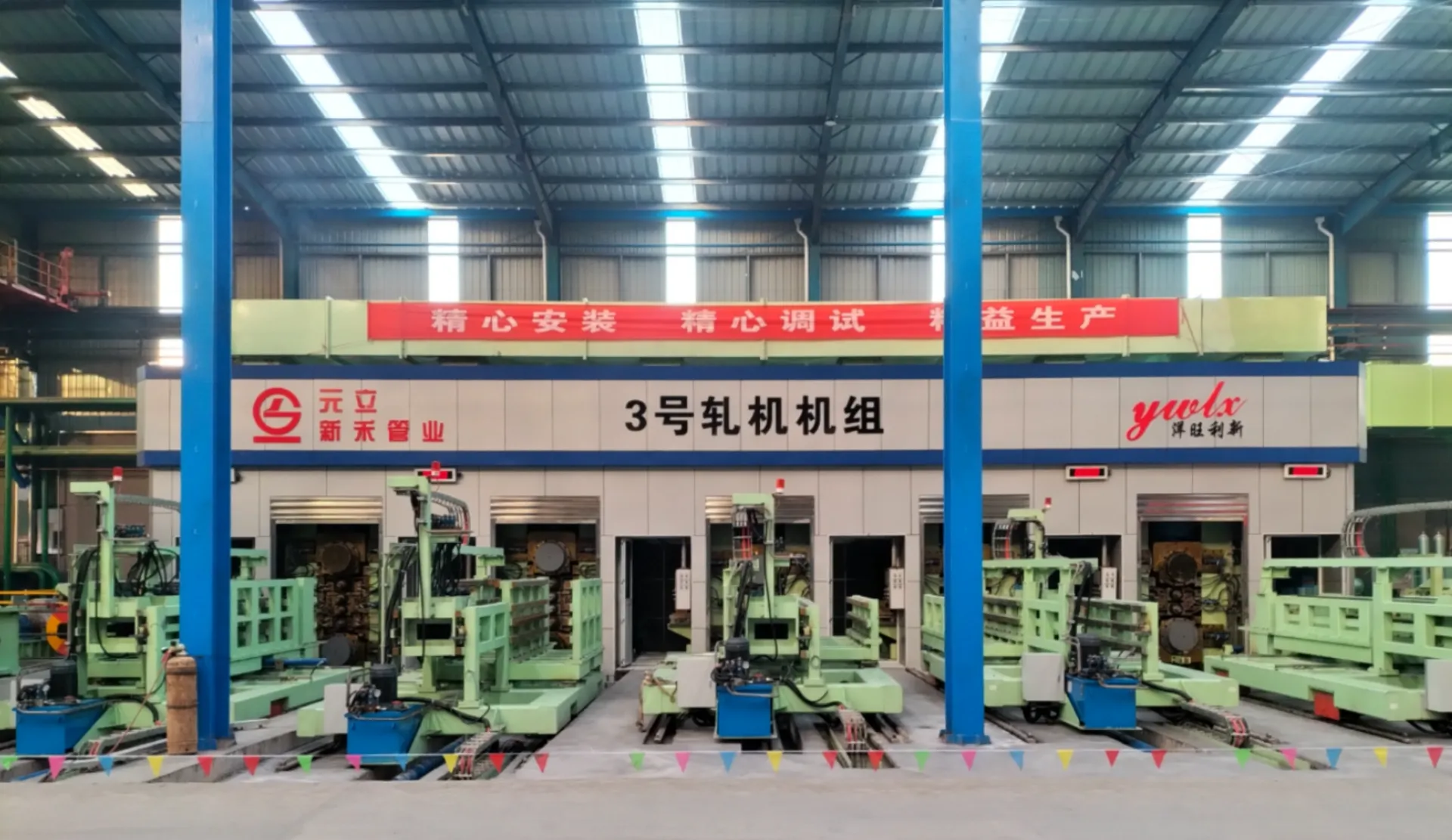 Cladding Rolling MillIn the ever-evolving landscape of material engineering, cold-rolled steel strips have emerged as a fundamental component across countless industries. These strips, known for their superior surface finish and dimensional accuracy, play a critical role in applications ranging from automotive manufacturing to household appliances. Cold rolling refers to the process of strengthening steel by changing


